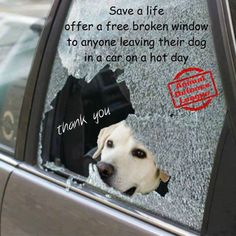
Do You Really Love Your Dog?

dogsinhotcarsI am shamelessly cutting/copying and pasting the article below (thank you American Veterinary Medical Association) because of a story a friend shared today that really pissed me off!  “Today at Target/Diamond Bar as I was going to my car, I saw a dog in a car in the parking lot. It was panting heavily and trying to stick its head out the couple-inch opening in the window so I went back in to ask the manager to page the owner. It had been half an hour since I walked by the dog!! When the owner came out she said it wasn’t that hot! SMH! Please remember dogs have a higher temp than us and cars get hot fast! PLEASE DON’T LEAVE YOUR DOG IN THE CAR!”

Thank you for the inspiration for this blog post Simone!

TV, Internet and Newspapers all share stories just like this, often with tragic consequences.  Still people leave pets, and babies, in the car.  WTF?  PEOPLE NEED TO SMARTEN UP!  Please read the article below and keep in mind that, even on a cool day, a car is up to 40° F hotter inside.  If your pet or baby can’t go with you, wherever you just must go, then leave them home in another’s care.  It’s just not worth the risk and potentially deadly consequences.

You can see this article “Pets in Vehicles” at the highlighted link.

Every year, hundreds of pets die from heat exhaustion because they are left in parked vehicles. We’ve heard the excuses: “Oh, it will just be a few minutes while I go into the store,” or “But I cracked the windows…” These excuses don’t amount to much if your pet becomes seriously ill or dies from being left in a vehicle.

The temperature inside your vehicle can rise almost 20º F in just 10 minutes. In 20 minutes, it can rise almost 30º F…and the longer you wait, the higher it goes. At 60 minutes, the temperature in your vehicle can be more than 40 degrees higher than the outside temperature. Even on a 70-degree day, that’s 110 degrees inside your vehicle!

Your vehicle can quickly reach a temperature that puts your pet at risk of serious illness and even death, even on a day that doesn’t seem hot to you. And cracking the windows makes no difference.

Want numbers? An independent study showed that the interior temperature of vehicles parked in outside temperatures ranging from 72 to 96º F rose steadily as time increased. Another study, performed by the Louisiana Office of Public Health, found that the temperatures in a dark sedan as well as a light gray minivan parked on a hot, but partly cloudy day, exceeded 125oF within 20 minutes.


Estimated Vehicle Interior Air Temperature v. Elapsed Time
Elapsed time Outside Air Temperature (F)
70 75 80 85 90 95
0 minutes 70 75 80 85 90 95
10 minutes 89 94 99 104 109 114
20 minutes 99 104 109 114 119 124
30 minutes 104 109 114 119 124 129
40 minutes 108 113 118 123 128 133
50 minutes 111 116 121 126 131 136
60 minutes 113 118 123 128 133 138
> 1 hour 115 120 125 130 135 140
Courtesy Jan Null, CCM; Department of Geosciences, San Francisco State University

Watch an animated video about in-vehicle temperatures.

This study also found that cracking the windows had very little effect on the temperature rise inside the vehicle. This is definitely a situation where “love ’em and leave ’em” is a good thing. Please leave your pets at home at home when you can…they’ll be safe and happily waiting for you to come home.

…but wait, there’s more!

The risks associated with pets in vehicles don’t end with heatstroke. Just as you should always wear your seatbelt to protect you in case of a collision, your pet should always be properly restrained while in the vehicle. That means a secure harness or a carrier.

A loose, small pet could crawl down in the footwell, interfering with use of the brake or accelerator pedal. A small pet sitting in your lap could be injured or killed by the airbag or could be crushed between your body and the airbag in a collision, and a large pet leaning across your lap can interfere with your view of the road and can be injured by the air bag in a collision. Unrestrained pets could be thrown out or through windows or windshields in a collision. And not only could your pet be injured in the collision, but it might also increase your risk of collision by distracting you and taking your attention away from where it should be – on the road.

To learn more about the importance of restraining your pets, visit Paws to Click.

Most of us smile when we see a dog’s face happily hanging out a window, digging the ride and the smells wafting on the breeze, but this is a very risky venture for the dog for three reasons. One, it means your dog isn’t properly restrained – and we’ve already told you why that’s so important. Two, your dog is at high risk of eye, ear, face and mouth injury from airborne objects when it’s got its face hanging out the window. Three, letting your dog hang any part of its body out of the window increases the risk that (s)he could be thrown out of the vehicle during a collision, lose its balance and fall out of the open window during an abrupt turn or maneuver, or jump out of the vehicle to threaten another dog or a person.

And let’s not forget the severe dangers of driving with your dog in the bed of a pickup truck. Dogs can fall or jump from the truck bed and be injured or killed on impact, or be struck by other traffic. And just as letting your dog hang its head out of the window puts it at risk of injury from debris, a dog in a truck bed is even more exposed to airborne hazards. Using a appropriate-length tether may reduce the risk that your dog will exit the truck bed, but the tether could tangle, injure, or even choke your dog. If you must transport your dog in the bed of a pickup truck, use a secured and appropriately sized and ventilated dog kennel. (For more information, read our Dogs Traveling in Truck Beds literature review.)

Before you put your pet in the vehicle, ask yourself if you really need to take your pet with you – and if the answer is no, leave your pet safely at home. If you must take your pet with you, make sure (s)he is properly restrained so the trip is as safe as possible for both of you.

Are you on Facebook?  If you are interested in blog follow ups, free or discounted stuff I find, things that make me wonder, scream like a maniac, laugh or scream in frustration, join the more than 2,500 people who find me engaging or amusing at the page dedicated to this blog: https://www.facebook.com/extremeblondemoments

Dog Owners Rock!

themorepeopledogIf you own at least one dog, you are part of a whopping 44% of Americans who do.  According to an American Pet Products survey, 54.4 Million Americans own at least 1 dog.  Don’t fear cat owners, you are represented too.  35% of American households own at least 1 cat. 🙂
The survey also revealed that spending on pets has DOUBLED since 2001.  Between 2001 and 2015 Americans jumped from spending $28.5 BILLION to $60.28 BILLION.  That’s a lot of kitty litter, toys, food & whatnots for our pets!

Ranked by the number of households with dogs, the number of dog parks & trails, dog friendly restaurants & stores, pet stores and dog walkers, these are the 10 top cities for dog owners:

1. Charleston, S.C.

  • Median home price: $349,000
  • Households who own a dog: 68%

2. Temecula, Calif.

  • Median home price: $519,000
  • Households who own a dog: 85%

3. Las Vegas

  • Median home price: $249,000
  • Households who own a dog: 62%

4. Scottsdale, Ariz.

  • Median home price: $596,500
  • Households who own a dog: 69%

5. San Diego

  • Median home price: $689,000
  • Households who own a dog: 63%

6. Austin, Texas

  • Median home price: $450,000
  • Households who own a dog: 61%

7. Tampa, Fla.

  • Median home price: $230,000
  • Households who own a dog: 57%

8. Fort Collins, Colo.

  • Median home price: $419,000
  • Households who own a dog: 67%

9. Atlanta, Ga.

  • Median home price: $314,900
  • Households who own a dog: 54%

10. Seattle, Wash.

  • Median home price: $609,000
  • Households who own a dog: 52%

I didn’t notice any Orange County, California cities listed and that really surprises me!  It seems everywhere I look there’s a person walking at least one dog, there seem to be dog parks springing up left and right, people are bringing their dogs to every store they shop at, and the number of dog friendly restaurants is going up.  I’m sure we’ll be represented in next year’s survey, right NAR? Hmmm.

Are you on Facebook?  If you are interested in blog follow ups, free or discounted stuff I find, things that make me wonder, laugh or scream in frustration, join the more than 2,500 people who find me engaging or amusing at the page dedicated to this blog: https://www.facebook.com/extremeblondemoments

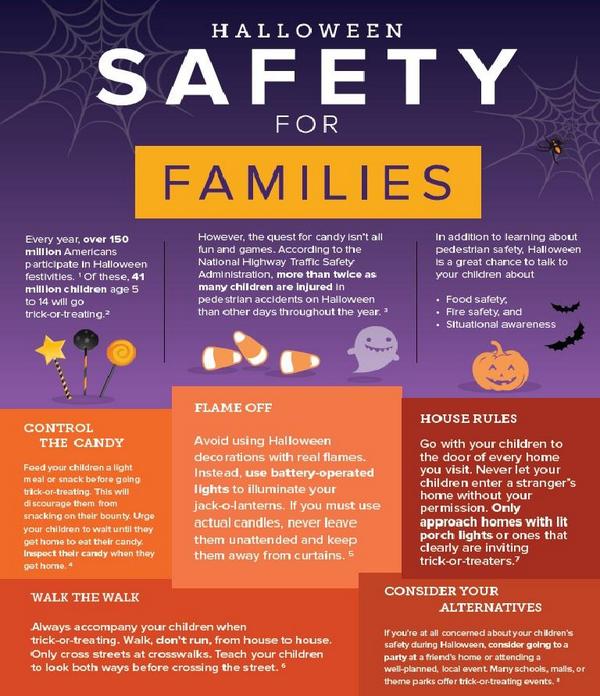
The Annual Pursuit of Candy Handouts

halloween safety for families

Today it’s short and sweet:  Keep your kids and pets safe this Halloween!

halloweensafety

If you are on Facebook and are interested in the things I may not devote an entire blog post to, but that make me wonder, piss me off, funny quips, photos and other things, I have a page followed by more than 2,000 people who find me engaging and/or mildly amusing:  https://www.facebook.com/extremeblondemoments

There’s No Excuse Not to Be Prepared!

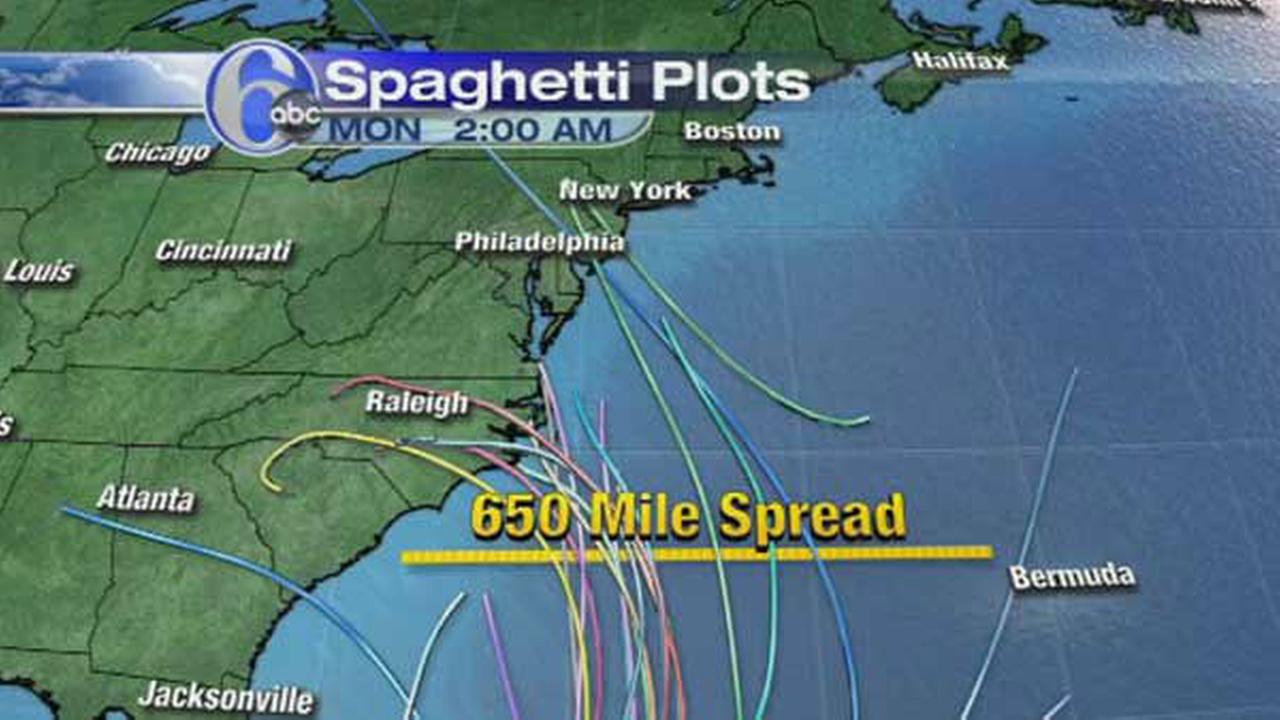
joaquin1For a few days now, I’ve seen news items regarding Hurricane Joaquin, which is headed Northwest through the Bahamas toward the eastern United States.  Forecasters are warning that there will be heavy rain, winds, and flooding from the storm surge.

joaquinfloodpotentialThe Weather Channel and other news outlets are warning that this will start this weekend and carry through into the first of next week.  News outlets are warning of “Historic rains” and naming specific states that should be preparing for their homes for a strong potential of flooding now.  Some are even suggesting getting away from down-slope areas through the weekend.

Other than worrying for friends and family, this storm will have no impact on me because I am on the WEST COAST, but I’m paying attention.  Unfortunately I know that, just like every other year, my television, Twitter feed, and Facebook will be flooded for the next week or two with stories and pictures of people and places being overrun, as if surprised by the arrival and impact of this Category 4 Hurricane (right now that means it has a wind speed range of 130-156 mph).

I’m sure I look like a bitch, but the tracking mechanisms and technology in place allow plenty of advance knowledge of the likelihood of the storms’ paths, so I have a couple of huge problems with what then always comes next.  Hmmm

  1. Pictures of people who didn’t evacuate as ordered and have become stranded causing first responders and other emergency personnel to risk themselves rescuing them when they could be helping those who legitimately COULD NOT get out of the storm’s way;
  2. The inevitable pleas for donations that are needed as a result of people:
  • Not evacuating when they had advance notice and warning
  • Not keeping the supplies necessary on hand: in basements/garages/attics, etc., to secure windows, etc. since they know that there is a great likelihood, due to where they live, that they will see storms
  • Not preparing their families and pets/livestock for the possibility of being on their own, without services for a time, and unable to leave where they are due to bad roads, debris or residual flooding after the storm passes
  • Not checking to make sure neighbors who may be less well off or who are elderly/disabled are adequately prepared or have made arrangements to evacuate

disasters background as words clouds.

So, for those who’d like a refresher, here is what FEMA recommends be done in preparation for the arrival of Joaquin, or any other severe weather or natural disaster that could occur where you live, for that matter:

  • Hurricane winds can cause trees and branches to fall, so trim or remove damaged trees and limbs to keep you and your property safe: especially those close enough to fall on your home
  • Secure loose rain gutters and downspouts and clear any clogged areas or debris to prevent water damage to your property
  • Reduce property damage by retrofitting to secure and reinforce the roof, windows and doors, including the garage doors (including sturdy weather stripping under and around doors, garage doors, outdoor basement access, and windows)
  • Purchase a portable generator or install a generator for use during power outages. Remember to keep generators and other alternate power/heat sources outside, at least 20 feet away from windows and doors and protected from moisture; and NEVER try to power the house wiring by plugging a generator into a wall outlet.

36 Hours before a storm:

  • Turn on your TV or radio in order to get the latest weather updates and emergency instructions
  • Build or restock your emergency preparedness kit. Include a flashlight, batteries, medicines, cash, a fully charged portable cell phone charger, Baby food/formula/diapers, Pet food/supplies (leashes), heavy duty trash bags, water, non-perishable food (stored in a sealed Rubbermaid type container or clean large locking trash can lined with a trash bag and zip tied closed to keep food dry), first aid supplies, heavy tarps and duct tape in case your building sustains damage allowing rain in, and copies of your critical documents in resealable bags to keep them safe
  • Plan how to communicate with family members if you lose power. For example, you can call, text, email or use social media. Remember that during disasters, sending text messages is usually reliable and faster than making phone calls because phone lines are often overloaded
  • Review your evacuation plan with your family. You may have to leave quickly so plan ahead
  • Keep your car in good working condition, and keep the gas tank full; stock your vehicle with emergency supplies and a change of clothes
  • Bring pets inside, crate them if you feel evacuation will be necessary or if they are particularly anxious.  Keep their harnesses or collars on for a quick snap of their leash in event of an emergency evacuation
  • Bring loose, lightweight objects inside that could become projectiles in high winds (e.g., patio furniture, garbage cans); anchor objects that would be unsafe to bring inside (e.g., propane tanks)
  • Cover all of your home’s windows. Permanent storm shutters offer the best protection for windows. A second option is to board up windows with 5/8” exterior grade or marine plywood, cut to fit and ready to install

6-18 Hours before projected storm arrival:

  • Turn on your TV/radio, or check your city/county website every 30 minutes in order to get the latest weather updates and emergency instructions.
  • Charge your cell phone and other portable wifi/cellular devices fully so you will have a full battery in case you lose power.  Shut off all but your cellphone to conserve power in those devices
  • Turn your refrigerator and/or freezer to the coldest setting and open only when necessary. If you lose power, food will last longer. Keep a thermometer in the refrigerator to be able to check the food temperature when the power is restored.  If you have prepared a 5 day or longer capable cooler with ice, store dairy and quickly spoiled foods in this.  Leave it shut!
  • If you’re not in an area that is recommended for evacuation, plan to stay at home or where you are and let friends and family know where you are
  • Check on your neighbors

With any luck this storm will decide to turn more to the east and dissipate over the Atlantic Ocean so that the impact isn’t as severe as forecasted, but it is never a bad idea to be prepared.

I’m reviewing my own emergency preparedness list for the El Nino rains forecasted for the west coast this winter, and the hard to predict, earthquakes that we get occasionally in California.

If you are on Facebook and are interested in the things I may not devote an entire blog post to, but that make me wonder, piss me off, funny quips, photos and other things, I have a page followed by nearly 2,000 people who find me engaging and/or mildly amusing:  https://www.facebook.com/extremeblondemoments

The Joy and Sorrows of Pup Parenting

lovemylabWe’ve all seen the shirts, coffee mugs, magnets and bumper stickers proclaiming that our pets are pretty much the center of the universe, prettier-smarter-better than anyone else’s, and the loves of our lives.

My labs, of course, are all of the above and more. 😉

I have 3 Labrador Retrievers and 1 Selkirk Rex cat who are, indeed, the center of my universe.  Daisy is my 11 1/2 year old “Senior Citizen” Lab, Dany is our 3 year old Lab, Lucky is my 3 year old Selkirk Rex kitty and Dusty is my 1 year old Lab pup.

Just over 15 months ago I discovered a lump underneath Daisy’s left ear.  I assumed it was related to the ear she’d been scratching at and took her into the vet to get some antibiotics to clear it up.  When her blood tests came up inconclusive for any kind of infection, we spent more than $2500 and 3 weeks searching out answers to what was ailing my girl.  We finally got an answer when my vet sent a tissue sample out to a friend she had at the Veterinary Diagnostic Laboratory at Colorado State University.

It turned out that we had stumbled upon the very early stages of Lymphoma in our beloved baby.  We went through the potential treatment plan, what we were facing in costs, and what the likely side effects and prognosis were for Daisy.  I wasn’t ready to make a snap decision, wanted to do my own research and told our vet we wanted to talk about our options before starting the course of chemotherapy that they were recommending begin immediately.

Daisy gave us no indication that she was feeling ill at all.  We did our research, found out that the strain of Lymphoma we were dealing with was a slow grower and that many owners, especially of senior dogs, opted to not go the route of chemotherapy. It was a hard decision to make, but we finally decided that we would rather have fewer good months of time with Daisy not feeling ill from the side effects of treatment and set about making some changes to improve her already good life.

Already a very pampered, spoiled primarily indoor dog eating a grain free diet (Blue Freedom Large Breed Formula), I made the decision to continue her once daily 20 mg dose of Prednisone to try and arrest the swelling of the lymph node we had confirmed was cancerous and to attempt to slow the spread to her other lymph nodes.  To that established routine, I also began giving her a daily probiotic (GNC Gas Less) as well as a Glucosamine supplement to strengthen her joints.  Daisy also continued to enjoy a variety of fruits and vegetables straight from our garden and even the occasional scrap or two of steak and chicken.

After a week or two on the new diet/supplements, Daisy was more active, her eyes were clearer and she appeared healthier than I had seen her in the past couple of years.  She was loving having the new puppy (Dusty) to mother and train and, as we found out later, was doing far better than 2 other dogs who’d received the same diagnosis in the weeks surrounding hers.  All in all we have been quite lucky that we chose to take the path we did: She is 15 months post diagnosis and her vet team refers to her as their miracle girl!  She has shown no spread to her other lymph nodes and she has out lived the other two younger dogs who were treated with chemotherapy and survived only a couple of months after treatment began.

The most recent change that I made to keep Daisy, Dany and Dusty healthy is that I am no longer buying them processed pet treats.  I now make them at home and they love them!

Peanut Butter-Pumpkin Dog Biscuits

  • 2/3 Cup Pumpkin Puree
  • 1/3 Cup Creamy Peanut Butter
  • 2 Large Eggs
  • 2 1/2 Cups Gluten Free All-Purpose Flour

Preheat oven to 350 degrees F. In the bowl of an electric mixer fitted with the paddle attachment, beat pumpkin, peanut butter & eggs on medium until well combined. Gradually add flour at low speed until incorporated. If the dough seems a little tough, add a couple TBLS more Pumpkin Puree.  On a lightly floured surface, knead the dough 3-4 times until it comes together. Using a rolling pin, roll the dough to 1/4-inch thickness. Using cookie cutters, cut and place onto baking sheet lined with parchment paper or a silicone liner.  Place into oven and bake until the edges are golden brown, about 20-25 minutes.  Let cool completely and store in a sealed container.

themorepeopledog

If you are on Facebook and are interested in the things I may not devote an entire blog post to, but that make me wonder, funny quips, photos and other silly things, I have a page followed by more than 1,900 people who find me mildly amusing:  https://www.facebook.com/extremeblondemoments