

Is It a Migraine or Some Other Type of Headache?

headacheAnytime someone is suffering a particularly bad headache that lasts beyond a day there is a natural rush to label it a migraine.  Most of the time that assumption is incorrect.

What is a headache?

  • Unpleasant pains in your head that can cause pressure and aching
  • Can range from mild to severe pain
  • Usually occur on both sides of your head
  • Some specific areas where headaches can occur include the forehead, temples, and back of the neck
  • A headache can last anywhere from 30 minutes to a week
  • According to the Mayo Clinic, the most common headache type is a tension headache. Triggers for a tension headache include stress, muscle strain, or anxiety.

Ignoring the Migraine for the time being, other types of headaches include:

  • Cluster Headache – severely painful headaches experienced in cycles of attack followed by periods without pain on one side of the head; and
  • Sinus Headache – Often confused with migraines, sinus headaches co-occur with sinus infection symptoms like fever, stuffy nose, cough, congestion, and facial pressure; which then leads us to the Migraine Headache.

What Is a Migraine?  Intense or severe headache often accompanied by other symptoms including:

  • nausea
  • pain behind one eye or ear
  • typically on only one side of head
  • pain in the temples
  • seeing spots or flashing lights
  • sensitivity to light and/or sound
  • temporary vision loss
  • vomiting
  • intense pain, possibly throbbing
  • performing daily tasks nearly impossible
  • pain may be so severe that the sufferer seeks care at the Emergency Room
According to the U.S. Department of Health and Human Services, an estimated 29.5 million Americans experience migraines.  Migraine headaches are typically divided into two categories:  Migraine with or without an “aura.” An “aura” refers to sensations a person experiences before he or she gets a migraine.  The sensations typically occur anywhere from 10 to 30 minutes before attack.
These can include:
  • feeling less mentally alert or having trouble thinking
  • seeing flashing lights or unusual lines
  • tingling or numbness in the face or hands
  • unusual sense of smell, taste, or touch

Some migraine sufferers may experience symptoms a day or two before the actual migraine occurs. Known as the “prodrome” phase, these subtler signs can include:

  • constipation
  • depression
  • frequent yawning
  • irritability
  • neck stiffness
  • unusual food cravings

So, how do you know if it’s really a migraine?  

migraine-vs-headache

Once you have determined that you are a migraine sufferer, it is important to try and isolate what your triggers are so that you can eliminate them and try to reduce the number days you are affected by them.  This chart is a handy guide to the most common migraine triggers.
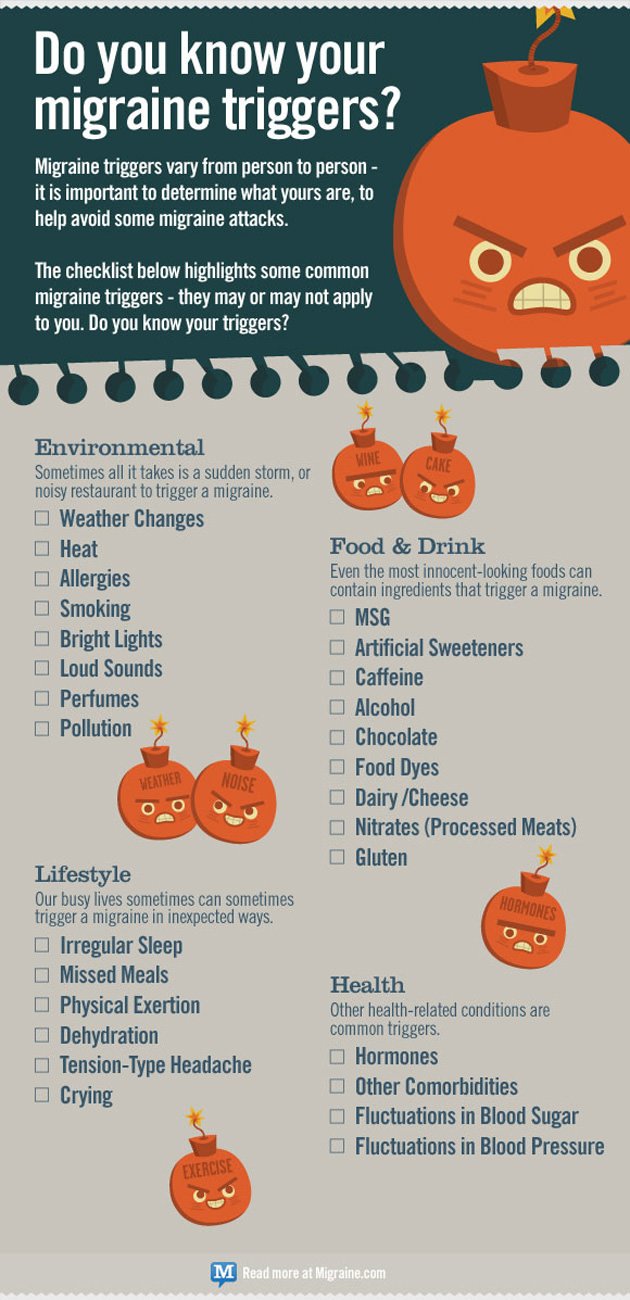
Migraine Triggers Infographic

Image via: Migraine Triggers Infographic

The only trigger I do not see is Donald Trump.  He gives me a Migraine. 😉 Hmmm

Do you use Facebook?  If you’re interested in the occasional product that intrigues me or something I’ve bought that’s a waste of time or money, things that make me wonder, piss me off, tickle my fancy, scream like a maniac, giggle, or yell in frustration, you can receive an email each time I’ve got something new to ponder or you can join the nearly 2,900 people who find me engaging or amusing at the Facebook page dedicated to this blog: https://www.facebook.com/extremeblondemoments

I Thought Blogging WAS a Non-Impact Activity

computerinjurySome of my 2000+ followers may have missed me for the past 2 weeks.  It seems that my obsession with using my computer, iPad and iPhone for communication, research and yes, blogging, has combined with my exercise routine to add yet another painful ailment deal with.

24 years ago I was a passenger in a car accident that broke my pelvis in multiple places, broke my ankle, caused a reverse curvature of my C-Spine, gave me a memory impairing concussion, and severely damaged my sciatic nerve which has resulted in doctors advising me not to take part in any high-impact activities ever since.

I try to follow their recommendations: I swim, do Pilates, walk (never run) on the treadmill, lift very light weights and I blog.  None of that should have caused me injury, but apparently all can contribute to the aches and pains I have radiating out from the teeny tiny little nerves in my neck, the cervical nerves:

  • C5 – controls the Deltoids (the rounded part of the shoulder) and the Biceps (flexion of the elbow and rotation of the forearm)
  • C6 – controls the muscles that make up the wrist extensors and enable wrist extension and hyper extension and the movements that are tied to the Biceps (front of the upper arm)
  • C7 – controls the Triceps (muscles in the back of the upper arm that allow the elbow to straighten)
  • C8 – controls the hands

I suffer from Cervicogenic Headaches:  Headaches originating from the neck often as a result of repetitive or prolonged turning of the neck (e.g. breathing during swimming), slouching (especially during sitting, sleeping or use of a computer), bending forwards of the neck (e.g. hunching over to read a phone/tablet), shoulders forwards activities (such as gripping the band handles for rowing or butterflies at Pilates).

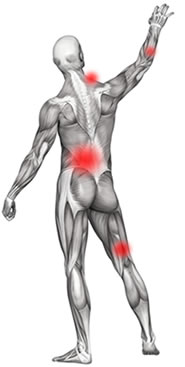
The last two weeks have been unbearable.  I’ve had a nagging headache in the top of my forehead and in my temples; pain, stiffness and difficulty turning my neck; my mid-back, shoulder blades and elbows ache; I have painful pins and needles and numbness in my hands and fingers; as well as a few bouts of dizziness.

I thought I could manage the pain with trigger point injections in my neck and upper back and a good massage.  I was so wrong!  The combination resulted in  even more pain and numbness and now has me in wrist neutralizing braces while I’m awake as well as trying to sleep.

  • Neurontin combined with a muscle relaxant dulls the pain enough for me to get a few hours sleep at night, but I am only comfortable on my back.  Unfortunately lying on my back compresses the base of my skull on the right and makes the pain and other symptoms worse.
  •  Typing puts my wrists in the wrong position and sends shooting pains up my arm & directly across my shoulders to my neck symptoms that mimic Carpal Tunnel Syndrome.  So now I have wrist position neutralizing braces for use during the day and while I sleep.

mrtpicIf these remedies don’t start to work soon I will be off to my favorite ART (Active Release Techniques) and Myofascial Trigger Point Release practicing chiropractor, Dr. Ron Higuera.  He has worked minor miracles on my body, but there will be cussing, crying and pain while he’s fixing me, so I think I can be forgiven if I am willing to try the chicken’s way first…hmmm.

If you are on Facebook and are interested in the things I may not devote an entire blog post to, but that make me wonder, piss me off, funny quips, photos and other things, I have a page followed by more than 2,000 people who find me engaging and/or mildly amusing:  https://www.facebook.com/extremeblondemoments